

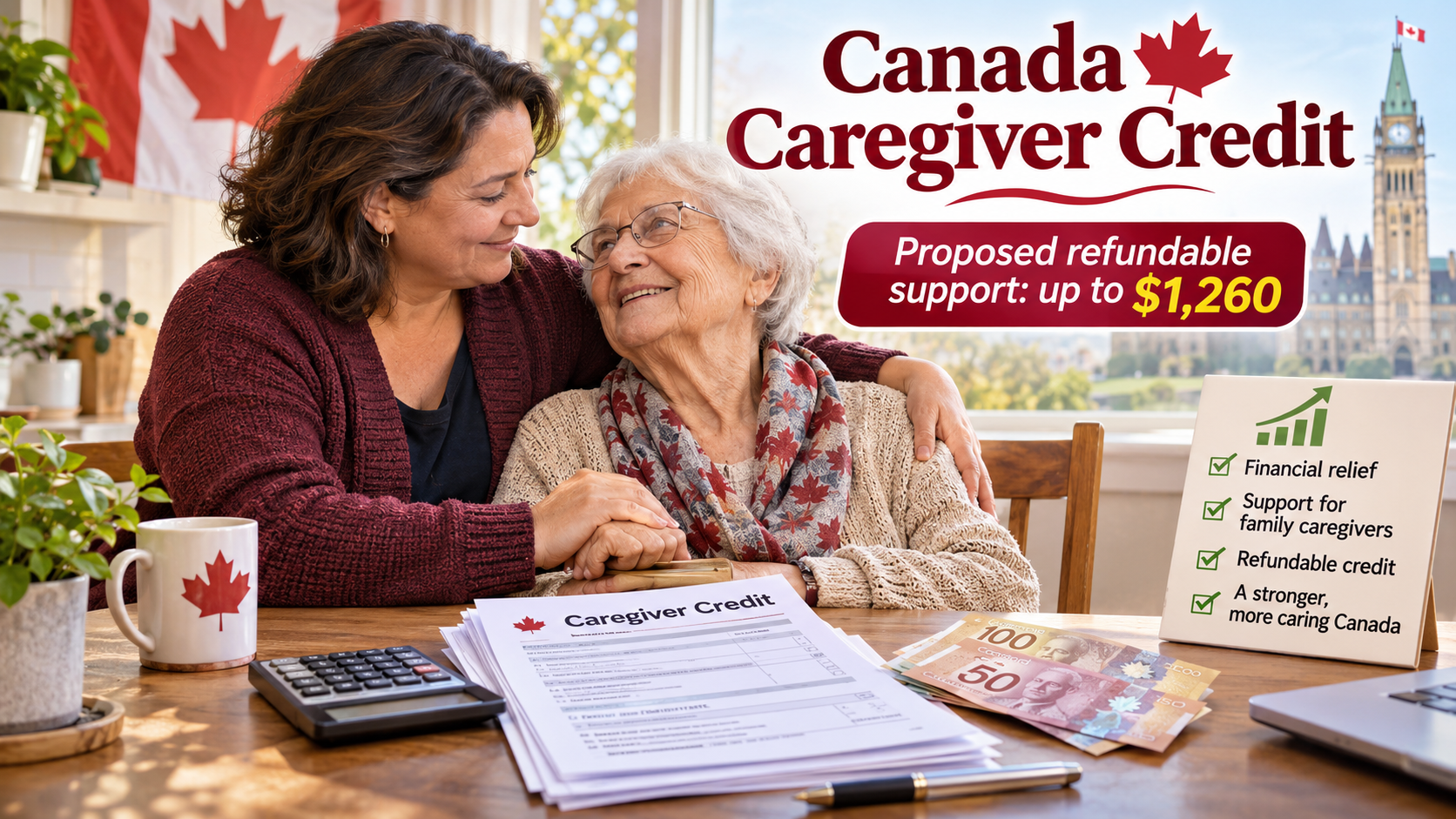
Canada Proposes Up to $1,260 Annually for Caregivers: What Prime Minister Mark Carney's Announcement Really Means
By Babajide Moronfolu | Babacares
November 15, 2026
Thousands of Canadians who provide daily care for sick, elderly, or disabled family members could receive additional financial relief under a new federal government proposal.
Prime Minister Mark Carney has announced plans to make the Canada Caregiver Credit fully refundable, potentially allowing eligible caregivers to receive financial support even when they do not owe federal income tax.
In a statement shared on his official LinkedIn account, Carney said the proposed change would provide more than $1,000 to over half a million Canadian caregivers.
Babacares has verified that the announcement is consistent with Canada's 2026 federal budget. However, the change remains a proposal, with implementation planned for the 2027 taxation year.
What Is the Canada Caregiver Credit?
The Canada Caregiver Credit is a federal tax credit designed to provide financial relief to Canadians who support a spouse, common-law partner, or qualifying dependent family member living with a physical or mental infirmity.
Under existing rules, the credit is non-refundable.
This means that it can reduce the amount of federal income tax someone owes, but it cannot generate a refund beyond the person's tax liability.
For example, a caregiver who qualifies for a $1,000 tax credit but owes no federal income tax may receive no financial benefit from that credit.
That has been one of the major limitations of the current system.
Many family caregivers reduce their working hours, leave employment, or experience significant financial strain while looking after loved ones.
Some earn too little to owe federal income tax, making the existing credit less useful to them.
What Is the Government Proposing?
Under Budget 2026, the federal government proposes to make the Canada Caregiver Credit fully refundable.
This would allow qualifying individuals to receive the value of their eligible credit even if they have little or no federal tax payable.
According to the government:
-
Approximately 585,000 caregivers are expected to benefit.
-
About 180,000 people who currently receive no benefit could receive support.
-
Eligible caregivers could receive up to $1,260 annually for the 2027 tax year, depending on their circumstances.
-
The government proposes $845 million in additional caregiver support over four years, beginning in 2027–28.
-
The measure is projected to lift approximately 15,000 people out of poverty.
Importantly, not every caregiver would receive $1,260. The actual amount would depend on eligibility, the dependent person's circumstances and income, and applicable tax-credit calculations.
Who Would Qualify?
The Canada Caregiver Credit generally applies to people who provide qualifying support to family members with physical or mental infirmities.
Potentially eligible family members include:
-
A spouse or common-law partner.
-
A child or grandchild.
-
A parent or grandparent.
-
A brother or sister.
-
Certain other relatives, including aunts, uncles, nieces, and nephews.
Eligibility depends on the relationship, medical circumstances, dependency requirements, and other Canada Revenue Agency rules.
The proposed refundable system would retain the underlying eligibility framework rather than automatically qualifying everyone who identifies as a caregiver.
Does This Mean Personal Support Workers Will Receive $1,260?
This is an important distinction.
Many Canadians work professionally as Personal Support Workers, home support workers, healthcare aides, or paid caregivers.
Their contribution to Canada's healthcare system is significant.
However, the Canada Caregiver Credit is not an employment bonus for professional caregivers.
Being employed as a PSW does not automatically make someone eligible.
A PSW may qualify if they also provide qualifying support to a spouse or eligible family member with a physical or mental infirmity and meet the applicable requirements.
For example, a PSW who works in community healthcare while also caring for a qualifying dependent family member could potentially be eligible.
The distinction matters because the announcement should not be interpreted as a government promise of an additional $1,260 to every person employed in the caregiving profession.
Why This Matters to Families
Across Canada, family caregivers play an important role in helping older adults and people living with disabilities or chronic illnesses remain in their homes.
Their responsibilities may include preparing meals, providing transportation, assisting with personal care, managing appointments, supervising medications, and offering emotional support.
Many caregivers balance these responsibilities with employment, parenting, and other financial obligations.
For some, caregiving means sacrificing income and career opportunities.
Others face increased costs for transportation, household needs, medical supplies, and accessibility equipment.
Making the tax credit refundable could provide additional support to families who previously received little or no benefit because they owed insufficient federal income tax.
What About Spouses Caring for One Another?
The announcement could be particularly relevant to couples in which one spouse provides ongoing care for a partner living with a qualifying medical condition.
For example, an individual supporting a spouse with significant physical limitations following a serious illness or disability may be eligible under the caregiver-credit framework.
However, a diagnosis or surgical history alone does not automatically establish eligibility. The individual must meet the relevant medical, dependency, and tax requirements.
Families should review the Canada Revenue Agency's rules rather than assume they qualify based solely on the need for assistance.
When Will Caregivers Start Receiving the Money?
The proposed change would apply to the 2027 and subsequent taxation years.
That means eligible individuals would generally claim the refundable credit when filing their 2027 income tax returns in 2028, subject to legislative approval and implementation.
The announcement should not be confused with a new monthly caregiving allowance or an immediate government payment.
As of November 15, 2026, the existing Canada Caregiver Credit remains non-refundable.
Caregivers should monitor updates from the Canada Revenue Agency and the Department of Finance for confirmed implementation details.
Healthcare Advocates Welcome the Proposal
The Canadian Cancer Society welcomed the announcement on November 6, 2026, describing refundable caregiver support as an important measure for families affected by cancer.
The organization highlighted the financial pressures associated with unpaid caregiving, including reduced earnings and additional household expenses.
For families navigating serious illness, the proposed change could make existing tax relief more accessible.
Babacares Perspective: Financial Recognition Is Important, but Caregivers Need More
Caregiving often involves invisible labour.
Behind many older adults living safely at home is a spouse, daughter, son, sibling, or other family member making significant personal sacrifices.
Financial support can help, particularly for lower-income households.
However, the challenges facing caregivers extend beyond taxation.
Families also need affordable respite services, accessible home and community care, mental health support, reliable transportation, and clear information about available assistance.
The proposed Canada Caregiver Credit reform may address one financial barrier, but it does not replace the need for comprehensive caregiver support.
For Canada, an aging population and growing demand for community healthcare make these discussions increasingly important.
What Caregivers Should Do Now
Canadians who care for eligible relatives should:
-
Review the current Canada Caregiver Credit eligibility rules.
-
Keep appropriate records of caregiving circumstances and supporting medical documentation.
-
Continue filing income tax returns, even when income is low.
-
Watch for legislative and CRA updates concerning the proposed refundable credit.
-
Seek advice from a qualified tax professional if uncertain about eligibility.
The Bottom Line
Prime Minister Mark Carney's announcement is supported by official federal budget documents.
The government proposes to make the Canada Caregiver Credit refundable, potentially benefiting approximately 585,000 Canadians.
The maximum projected benefit is $1,260 annually for 2027, but eligibility and individual amounts will vary.
Until the proposed change becomes law and takes effect, caregivers should not assume they are already entitled to receive the money.
At Babacares, we will continue following developments affecting caregivers, older adults, vulnerable families, and Canada's healthcare system.
Read more on Babacares.com, subscribe and share.
Sources
-
Government of Canada — Budget 2026, Chapter 3: Making the Canada Caregiver Credit Refundable
https://budget.canada.ca/2026/report-rapport/chap3-en.html -
Department of Finance Canada — Budget 2026, Tax Measures: Supplementary Information
https://budget.canada.ca/2026/report-rapport/tm-mf-en.html -
Canada Revenue Agency — Canada Caregiver Credit
https://www.canada.ca/en/revenue-agency/services/tax/individuals/topics/about-your-tax-return/tax-return/completing-a-tax-return/deductions-credits-expenses/canada-caregiver-amount.html -
Canadian Cancer Society — Federal Budget Delivers Support for Caregivers, November 6, 2026
https://cancer.ca/en/about-us/media-releases/2026/canada-caregiver-credit -
Mark Carney — LinkedIn Announcement
https://www.linkedin.com/feed/update/urn:li:share:7527830765515063296/











Comments