

Alternative Cancer Treatments: What Patients Should Know Before Abandoning Conventional Medical Care.
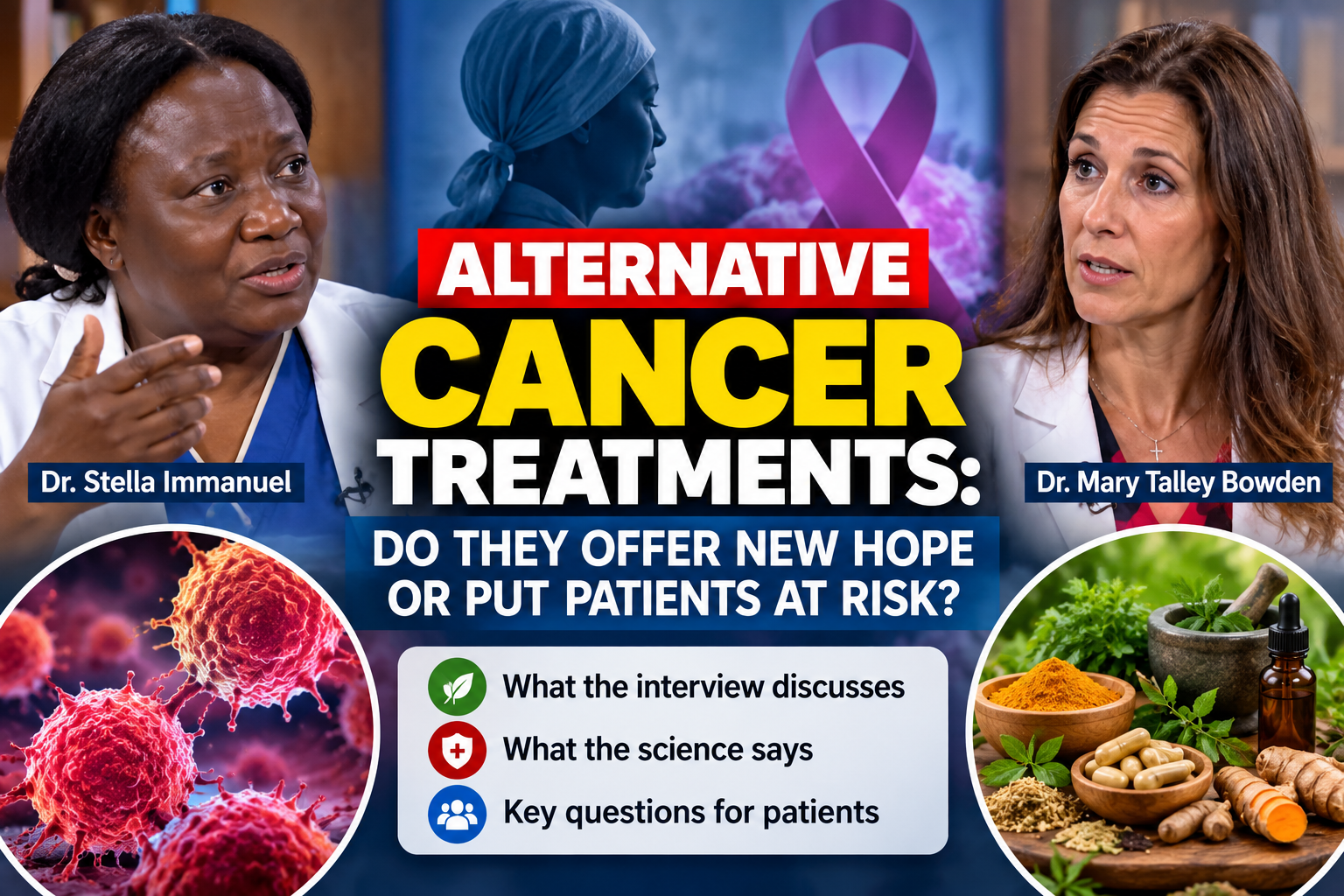
A circulating medical interview featuring Dr. Stella Immanuel and Dr. Mary Talley Bowden raises important questions about unconventional cancer therapies, scientific evidence and the choices facing patients.
By Babacares Health and Public Affairs Desk | October 26, 2026
When someone is diagnosed with cancer, hope becomes one of the most powerful influences on the decisions they make. But what happens when that hope leads them toward treatments whose effectiveness has not been scientifically established?
A circulating social-media interview featuring Dr. Stella Immanuel and Dr. Mary Talley Bowden has brought renewed attention to the debate surrounding alternative approaches to cancer treatment.
The video, shared under Dr. Immanuel's name, invites viewers to consider alternative cancer therapies.
For Babacares, this raises a wider public-health question: Can alternative cancer treatments genuinely help patients, or could relying on unproven remedies delay potentially lifesaving medical care?
Understanding Alternative Cancer Treatment
Cancer treatment has evolved considerably over recent decades.
Today, depending on the type and stage of cancer, patients may receive surgery, chemotherapy, radiotherapy, immunotherapy, hormone therapy or targeted medicines.
These treatments are selected according to clinical evidence and the patient's individual circumstances.
However, some patients also explore herbal preparations, special diets, supplements and other nonconventional approaches.
It is important to distinguish two terms.
Complementary therapies are used alongside established medical treatment. Some approaches, such as relaxation techniques, yoga and acupuncture, may help certain patients manage symptoms or treatment-related side effects.
Alternative therapies are used in place of conventional cancer treatment.
That distinction matters.
According to the United States National Cancer Institute, alternative treatment claims may sound promising, but many have not been adequately tested for safety or effectiveness.
Can Alternative Therapies Cure Cancer?
The available scientific evidence does not establish that herbal remedies, special diets, vitamins or other complementary health approaches can cure cancer.
The United States National Center for Complementary and Integrative Health states that no complementary approach has been shown to cure cancer or cause it to go into remission.
Some approaches may improve comfort or help patients cope with the effects of treatment.
But improving a patient's well-being is not the same as eliminating cancer cells.
This distinction is particularly important when treatments are promoted through personal testimonies, interviews or social media.
A patient's recovery story can be encouraging, but it does not, by itself, prove that a particular remedy caused the recovery.
Why Some Cancer Patients Turn to Alternative Treatments
For many patients, cancer treatment is physically, emotionally and financially demanding.
Fear of chemotherapy, concerns about surgery, treatment side effects and uncertainty about survival may influence healthcare decisions.
In countries such as Nigeria, the financial burden and limited availability of specialist cancer services can make treatment even more difficult.
Some patients turn to alternative practitioners because they believe natural remedies are safer, less expensive or more accessible.
Others may be influenced by religious beliefs, family advice or testimonies from people claiming to have recovered without conventional medical treatment.
These concerns deserve compassion and honest discussion.
However, patients should be given accurate information about the potential consequences of delaying effective treatment.
The Danger of Delaying Medical Care
According to the World Health Organization, early diagnosis and appropriate treatment can significantly improve outcomes for many cancers.
Some cancers are highly treatable when detected early.
Delays may allow disease progression and reduce the available treatment options.
There is also the risk that certain herbal preparations or supplements could interfere with prescribed cancer medicines.
The National Cancer Institute warns that some products may change how cancer treatments work or cause additional harm.
Natural does not automatically mean safe, and unconventional does not automatically mean effective.
Cancer Care Should Also Address the Whole Person
Modern oncology increasingly recognizes that cancer affects more than the physical body.
Patients may experience anxiety, depression, loss of appetite, pain, fatigue, social isolation and financial distress.
This is why supportive and palliative care are essential.
Appropriate psychological counselling, nutritional support, rehabilitation, pain management and spiritual support can improve quality of life.
Where supported by evidence, complementary approaches may form part of a coordinated care plan.
However, they should be discussed with the treating healthcare team to avoid harmful interactions or delays.
What Nigeria's Healthcare System Must Address
The debate about alternative cancer treatment should encourage Nigerian policymakers to examine why some patients struggle to access established cancer services.
Questions include whether diagnostic services are affordable, whether specialist treatment is available outside major cities, and whether patients receive sufficient information about their options.
Public education is equally important.
Cancer patients should understand their diagnosis, the proposed treatment, possible side effects and the evidence supporting different options.
Healthcare professionals must also communicate respectfully with patients who express interest in traditional or complementary medicine.
Rather than dismissing their concerns, clinicians should explain what is known, what remains uncertain and what could be harmful.
Babacares Perspective: Hope Must Be Supported by Evidence
As a healthcare worker and public-health communicator, I believe patients deserve both hope and truthful medical information.
Cancer treatment should not become a contest between conventional medicine and every form of complementary care.
The real issue is whether a proposed intervention has reliable evidence of benefit, acceptable safety and a clearly defined role in patient care.
Innovative treatments deserve research.
Patients deserve compassion.
And healthcare systems must continue investing in effective, affordable cancer services.
However, no patient should be encouraged to abandon proven cancer treatment because of an unverified promise of a cure.
Conclusion: Make Informed Decisions, Not Fear-Driven Choices
The discussion involving Dr. Stella Immanuel and Dr. Mary Talley Bowden presents an opportunity for deeper public examination of alternative cancer treatment claims.
Such discussions can encourage patients to ask questions, but they must be assessed against credible scientific research.
Cancer patients should be supported in making informed decisions with qualified healthcare professionals.
A treatment should be judged not by how confidently it is promoted, but by the quality of evidence demonstrating that it works and is reasonably safe.
Hope is essential in cancer care. But hope without reliable medical evidence can sometimes expose vulnerable patients to unnecessary risks.
THE BABACARES QUESTION
Why are some cancer patients increasingly attracted to alternative treatment claims, and what should governments, healthcare professionals and regulators do to protect patients from misinformation?
We welcome evidence-based perspectives from oncologists, researchers, cancer survivors, healthcare professionals and patients.
READ MORE ON BABACARES.COM, SUBSCRIBE AND SHARE.
References
-
United States National Cancer Institute — Complementary and Alternative Medicine for Patients
-
Social-media interview featuring Dr. Stella Immanuel and Dr. Mary Talley Bowden, supplied to Babacares. Complete spoken statements and treatment-specific claims have not been independently verified.









Comments